Pages: 264
ISBN: 9789464264487
Pub Date: April 2026
Imprint: Sidestone Press
Illustrations: 117fc / 55bw
Price:
£45.00
In stock
Pages: 264
ISBN: 9789464264494
Pub Date: April 2026
Imprint: Sidestone Press
Illustrations: 117fc / 55bw
Price:
£95.00
Usually available in 6-8 weeks
You will be redirected to our distribution partners, Pen & Sword Books, to complete your purchase.
Description:
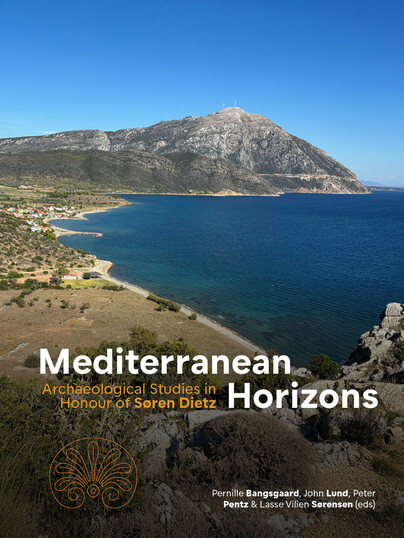
The Mediterranean has always been a crossroads of cultures, ideas, and histories. From the Stone Age to the first millennium BC, this vibrant region shaped—and was shaped by—the movements of people, the exchange of goods, and the rise of complex societies. Mediterranean Horizons celebrates the career of Søren Dietz, a pioneering archaeologist and founder of The Danish Institute in Athens whose work has illuminated these connections across time and space.This honorary volume brings together researchers and friends to explore themes close to Søren’s heart: the Aegean’s ancient past, the Bronze Age networks linking Scandinavia to the Mediterranean, and the rich tapestry of life in Greece and Tunisia. The book begins in the Stone Age, where climate shifts and the quest for rare materials drove early communities to innovate and adapt. It then turns to the Bronze Age, a time of bold trade routes, shared crafts, and cultural exchanges—from Baltic amber reaching Mycenaean Greece to Minoan treasures found in warrior graves.Later sections focus on mainland Greece, where Søren’s excavations revealed the daily lives of Iron Age villagers, the grandeur of ancient theaters, and the secrets of fortified cities. The journey ends in Tunisia, where his work in Carthage and the Africa Proconsularis project uncovered layers of history beneath the North African soil.More than just a collection of research, this book is a tribute to curiosity and collaboration. It reflects Søren’s belief that archaeology is not just about uncovering objects, but about understanding the people and societies who made and used them. With vivid stories and novel insights, Mediterranean Horizons invites readers to explore the past—and to see how its echoes still resonate today.
The Mediterranean has always been a crossroads of cultures, ideas, and histories. From the Stone Age to the first millennium BC, this vibrant region shaped—and was shaped by—the movements of people, the exchange of goods, and the rise of complex societies. Mediterranean Horizons celebrates the career of Søren Dietz, a pioneering archaeologist and founder of The Danish Institute in Athens whose work has illuminated these connections across time and space.This honorary volume brings together researchers and friends to explore themes close to Søren’s heart: the Aegean’s ancient past, the Bronze Age networks linking Scandinavia to the Mediterranean, and the rich tapestry of life in Greece and Tunisia. The book begins in the Stone Age, where climate shifts and the quest for rare materials drove early communities to innovate and adapt. It then turns to the Bronze Age, a time of bold trade routes, shared crafts, and cultural exchanges—from Baltic amber reaching Mycenaean Greece to Minoan treasures found in warrior graves.Later sections focus on mainland Greece, where Søren’s excavations revealed the daily lives of Iron Age villagers, the grandeur of ancient theaters, and the secrets of fortified cities. The journey ends in Tunisia, where his work in Carthage and the Africa Proconsularis project uncovered layers of history beneath the North African soil.More than just a collection of research, this book is a tribute to curiosity and collaboration. It reflects Søren’s belief that archaeology is not just about uncovering objects, but about understanding the people and societies who made and used them. With vivid stories and novel insights, Mediterranean Horizons invites readers to explore the past—and to see how its echoes still resonate today.