
Format: Hardback
Pages: 584
ISBN: 9780904887778
Pub Date: May 2026
Imprint: British School at Athens
Illustrations: 171 figures; 40 half-tone plates; 4 colour plates; 2 pocket plans
Price:
£235.00
In stock
You will be redirected to our distribution partners, Pen & Sword Books, to complete your purchase.
Description:
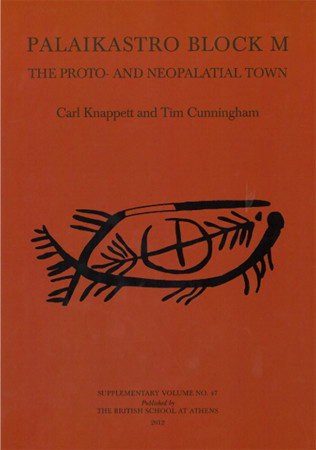
The 2012 survey and 2013–15 excavations at Palaikastro in eastern Crete have significantly enhanced our understanding of this locale’s Neolithic and Bronze Age occupation. Through dual ‘outside in’ and ‘inside out’ approaches, the project clarified many of the factors contributing to the gradual urbanisation of this major site. The ‘outside in’ approach involved research in the wider landscape to assess the relationship between the urban centre and its environs: we identified a series of structures testifying to sophisticated land management practices in neighbouring uplands, while analysis of cores provided important new palaeoenvironment data, indicating a substantial focus on both olive cultivation and ovicaprine herding from the Final Neolithic and throughout the Bronze Age. The ‘inside out’ approach involved geophysical survey and excavations within the urban centre, in an area previously dubbed the ‘palace fields’. While the palace proved to be a mirage, the excavations uncovered three residential buildings in a previously unexplored neighbourhood at the edge of town. With occupation stretching from MM II to LM III, this area provided fresh insights into the nature of occupation, with its frescoed house of MM III and LM IA (Building AP1), an annexe structure of LM IA (Building MP1), tephra from the Theran eruption, rebuilding and abandonment in LM IB (Building AM1), and further occupation in LM IIIA2–B before total abandonment after LM IIIB. This volume offers a full account of the excavation of these buildings, with chapters detailing their contexts, architecture and finds, including ceramics, stone tools and vases, metals, plaster, and seals. Special emphasis is also placed on the bioarchaeological findings: carpological, anthracological, animal bone, shell and fish remains, contextualised within the town and its territory. The various lines of evidence presented here provide a rich picture of life in and around a Bronze Age urban settlement on Crete, adding significantly to our existing knowledge from previous campaigns at Palaikastro itself and neighbouring sites in eastern Crete.