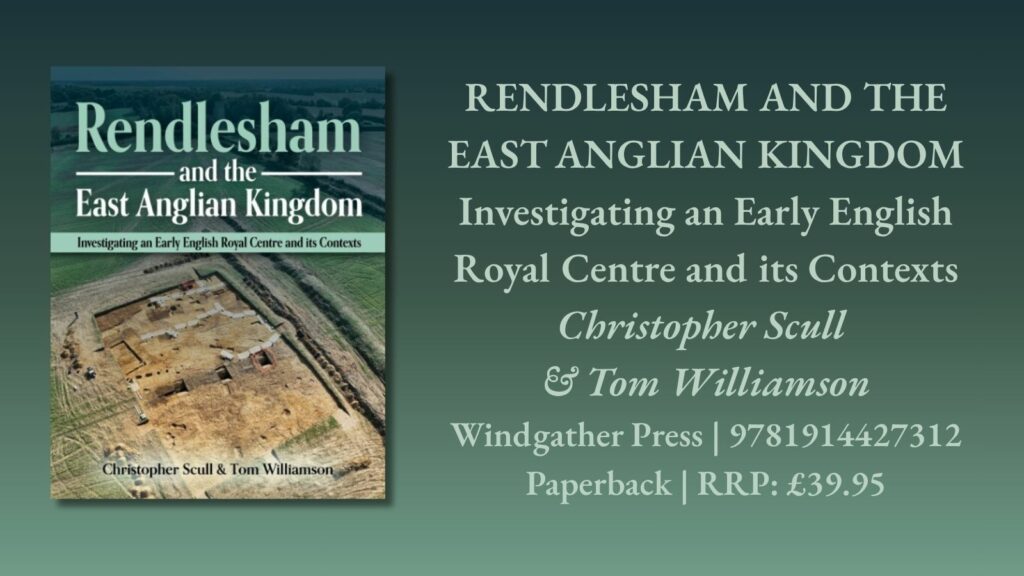
Unearth insights into Rendlesham Revealed, a community archaeology project run by Suffolk County Council which aimed to give as many people as possible an experience of real archaeology. The results of the archaeological investigation and landscape analysis undertaken as part of the project are set out in Windgather Press’ latest publication Rendlesham and the East Anglian Kingdom.
By Christopher Scull, co-author of
Rendlesham and the East Anglian Kingdom | 4 min read
Technical reporting and academic writing can sometimes make the most compelling stories seem dry and dull. Our aim in writing Rendlesham and the East Anglian Kingdom was to set out for people who are interested in archaeology and history, but who are not specialists in either subject, what has been found at Rendlesham and why it is significant, and to do so without over-simplifying or talking-down. This has always been part of the wider plan for communicating what the Rendlesham project has been about, sitting alongside the project’s academic and technical publications, and the exhibitions, web-pages and blogs aimed at wider audiences [https://heritage.suffolk.gov.uk/rendlesham]. It is particularly important because, from the very beginning, the project relied on the skills and hard work of a network of volunteers and the continuing support of the landowner and farmer, as well as co-ordination and expert input by professionals and academics.
As the book recounts, the site of the royal settlement at Rendlesham came to light in 2007 through illegal metal-detecting. Understandably concerned by the damage to crops and the looting of metalwork, the landowners contacted Suffolk County Council’s Archaeological Service (SCCAS), who rapidly pulled together what was known about the place and initiated a pilot survey by four expert metal-detectorists to find out what had been attracting thieves and to get some idea of what had been taken away for clandestine sale. They very quickly began to turn up metalwork – including gold jewellery and coins – that could only come from an aristocratic or royal settlement of sixth and seventh centuries AD. A painstaking survey co-ordinated by SCCAS undertaken between 2008 and 2014, in which the authorised detectorists covered every inch of an area of 170 hectares, proved this to be so.
The metal-detecting […] revealed the largest and richest settlement of its time known in England
The metal-detecting, and a programme of geophysical survey and plotting of aerial photographs, revealed the largest and richest settlement of its time known in England – covering 50 hectares and inhabited from the beginning of the fifth century AD with a heyday of wealth and magnificence between the late sixth and early eighth centuries AD. This is without doubt the site of the East Anglian royal centre of Rendlæsham, recorded by the Venerable Bede in his Ecclesiastical History of the English People as the place where king Æthelwold of the East Angles hosted the baptism of the East Saxon king Swithelm at some time between the years 655 and 663.
Volunteers from the local archaeological society – the Suffolk Archaeological Field Group – helped with small-scale archaeological excavation in 2013 and 2014 which confirmed that traces of buildings, pits and ditches belonging to the royal settlement lay buried beneath the modern fields. But even when the results were pulled together, there were still big questions about the royal centre that could only be answered by large-scale excavation. These were answered through a community archaeology project, Rendlesham Revealed, which was run by Suffolk County Council with a major grant from the National Lottery Heritage Fund.
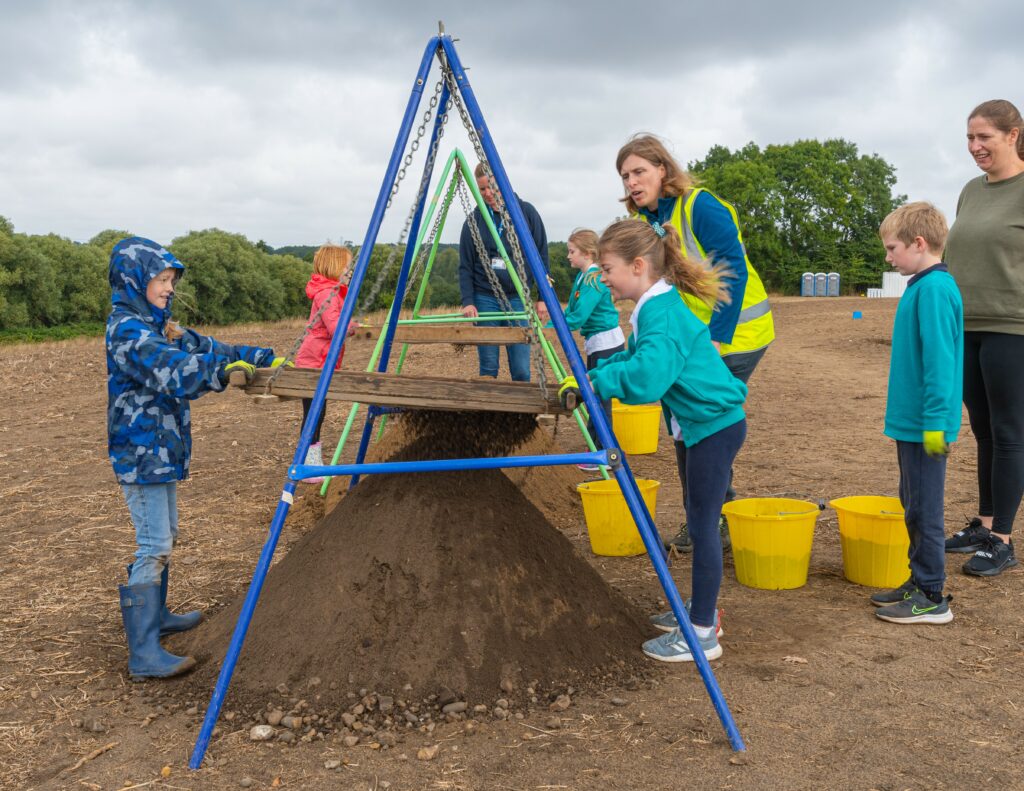
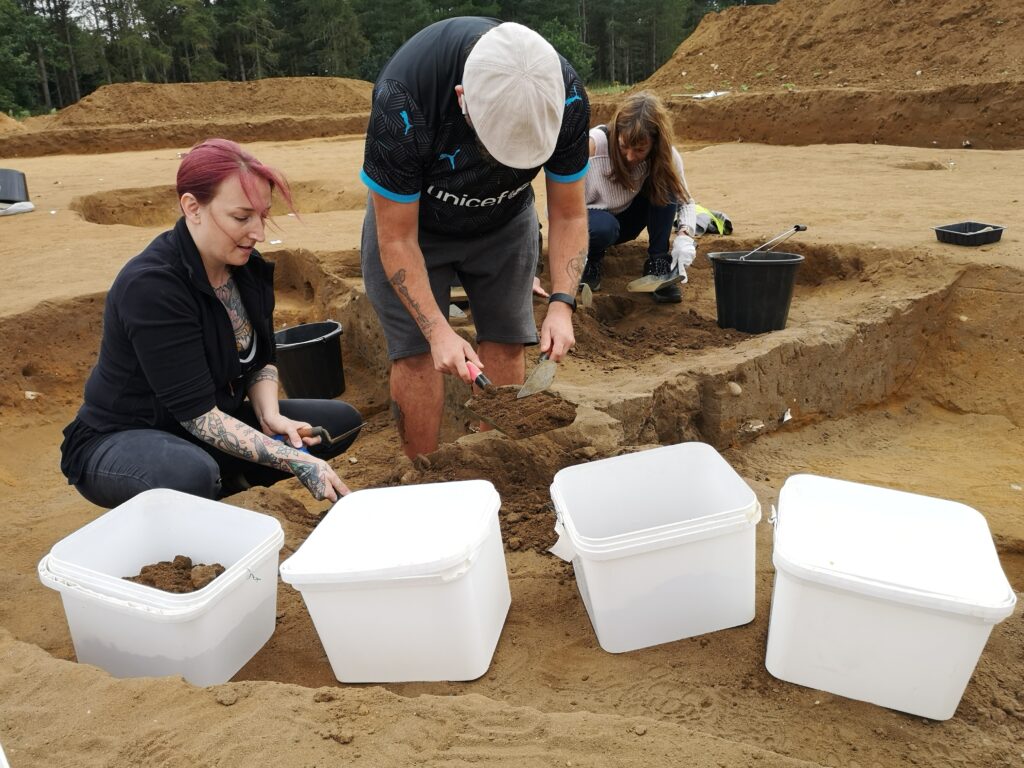
The main focus of this project was three seasons of excavation in 2021–2023. It was guided and managed by a small core of professional archaeologists, but most of those working on site were volunteers, many of whom had little or no previous archaeological experience. The project aimed to give as many people as possible an experience of real archaeology, contributing to internationally-important research while learning on the job or developing their skills. But it was also a priority to ensure that there were places for people who would not normally get the opportunity to work on archaeological projects but who would be likely to benefit from it. After consulting with a range of organisations, SCCAS partnered with Suffolk Young Carers, Suffolk Mind, and with three local primary schools at Rendlesham, Eyke and Wickham Market. Working on site as part of the archaeological team opened up a new world, building confidence in their own abilities and capacity to contribute alongside others. Everyone was provided with hands on learning, helping to excavate the archaeology, washing finds, and fieldwalking alongside the on-site team. Discovering the archaeology on their doorstep brought history closer to home for everyone, increasing their understanding and appreciation of their local area.
[U]nearthing these stories was a collective effort by everyone who worked on the project
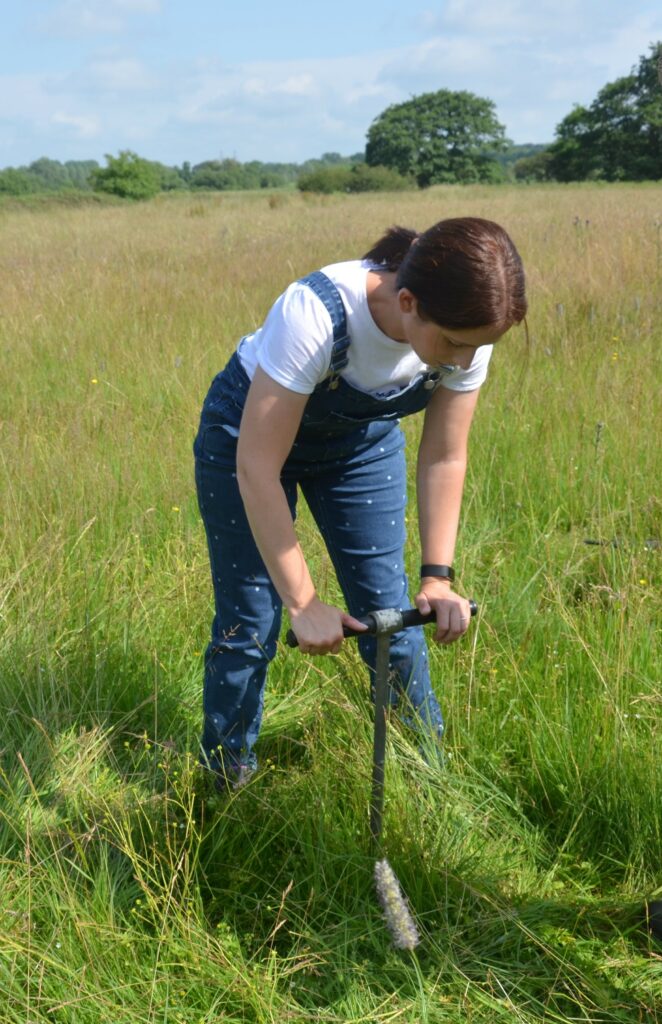
Rendlesham Revealed also had other strands of fieldwork – geoenvironmental survey, fieldwalking, and geophysics – as well as post-excavation and finds-handling work, and a programme of public outreach events and experimental archaeology. In addition, it aimed to improve understanding of the archaeology of the Deben valley and promote its protection and conservation, both by establishing a better knowledge base and by helping to inform those who own and work the land.
The results of the archaeological investigation and landscape analysis are set out in the book: the artefacts that illuminate past lives and lifestyles, from gold jewellery to humble cooking pots; the animal bones and plant remains that tell us about farming, feasting and the environment; and the foundations of the royal hall where kings of the East Angles hosted their guests and followers. But unearthing these stories was a collective effort by everyone who worked on the project or gave it their support, all of whom brought their own unique skills, experiences and enthusiasms to the task: a community of interest whose legacies are a better understanding of the past, and a stronger capacity to protect and conserve its physical remains.
Rendlesham and the East Anglian Kingdom is available from Script Books at 20% off until 31st May 2026.
Apply code LHM26 at checkout to redeem this discount.
 Follow