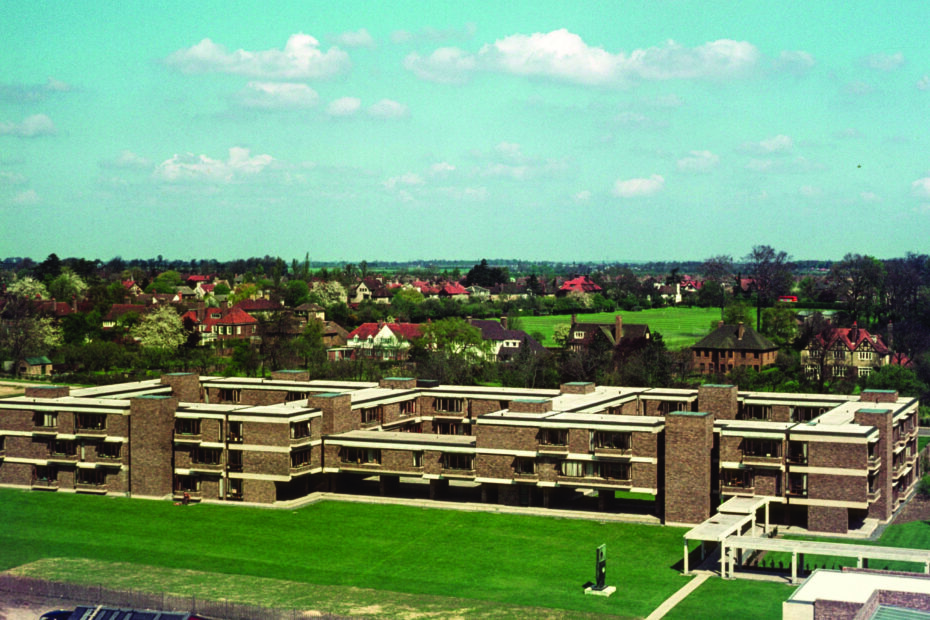
Meet Sheila Haywood (1911-1993), a hugely respected pioneer of 20th century landscape design in Britain. Although her diverse commissions included hospitals, new towns, a variety of industrial landscapes and the 1959 landscape master plan for Churchill College, Cambridge, her work has largely been lost to memory. In this blog, Paula Laycock, author of Sheila Haywood: Pioneering Landscape Architect, tells the story of how she first came across Haywood and how she cultivated her subsequent interest in this landscape designing trailblazer into the first major study of her life and work.
By Paula Laycock | 3 min read
A fervent reader and lover of gardens, and living in Cambridge at the time, I remember purchasing a book by Dr Ronald Gray entitled Cambridge Gardens (Pevensey Press, 1984). The book showcased the beautiful gardens of the Cambridge colleges with attractive full page colour photos of gardens such as those of King’s, Jesus and Newnham colleges. Some years later, and now working at Churchill College, I picked up the book again. Of course, the modernist buildings of Churchill College and the corresponding open landscape set in a framework of trees, did not offer the photographic opportunities afforded by the more traditional college gardens. In fact, I nearly missed the entry for Churchill altogether, for with just nine lines of text, Dr Gray had little to say. But he had observed that the landscaping and planting plan had been prepared by ‘Mrs Sheila Haywood of London’.
I recall that although I had looked, I had been unable to find out anything more about Haywood (1911–93) or her work. So it was a pleasant surprise when some thirty years later, and now working in the Churchill Archives Centre, I chanced upon some of her landscape drawings from 1959 and the early 1960s. My interest piqued, I delved further into the College Archive and found some limited correspondence between Haywood and the College together with a significant array of plans. Now eager to understand why her work seemed to be otherwise lost to memory, I started to carry out some more focused research and was able to draw up a basic biography which I then posted online.
The breakthrough came in 2017, in an email from Haywood’s elderly stepson, Mark, who was living in Burgundy in France. He had been informed of my post by a younger family member and graciously agreed to be interviewed. A recording of that meeting has now been deposited in the Churchill Archives Centre (CCRF/141/49).
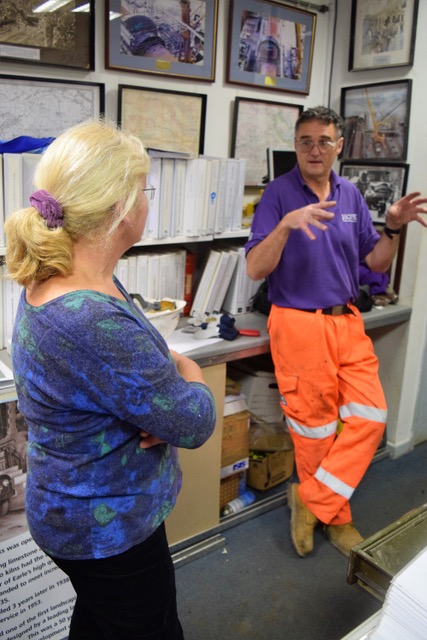
Image Credit: Paula Laycock, with permission for the Script Books Blog
Thus began a period of intensive research, often forensic, where I recreated family trees and chased up every name or event mentioned by Mark in his reminiscences. Internet search results were still limited, and I soon discovered that Haywood did not have a personal archive. I knew from Mark, too, that his stepmother’s photographs and slides had been lost in a burglary in the 1970s, so I doggedly followed every clue, and was thus able to build up a much wider picture of her life and work.
Another breakthrough was during a holiday in Derbyshire. Driving through the village of Hope, I mentioned to my husband that Haywood had some connection with the Hope Cement Works that we had just driven past and that I’d like to return one day to explore further. Without a word, my husband reversed the car and promptly drove up to the front entrance of the cement works (now Breedon Hope) where we watched the automatic barrier being raised to let us in. He nudged me into the reception and said ‘Ask!’. So, I did, and we met Malcolm Andrew, a long serving employee with an enormous interest in the history of the cement works. By now wearing hi-vis jackets, he led us through the cement works and across to a small hut in which the company’s archival papers were being stored. Malcolm knew of Haywood and her work at the Hope Cement Works and was happy to share. It was a seminal moment.
I soon discovered that Haywood had been Assistant to Sir Geoffrey Jellicoe from 1939–49 and this afforded some vital clues for further research. One of the most important resources was the Museum of English Rural Life in Reading (MERL) which holds the records of the Landscape Institute, and the support of Annabel Downs and FOLAR (Friends of the Landscape Archive at Reading) was pivotal.
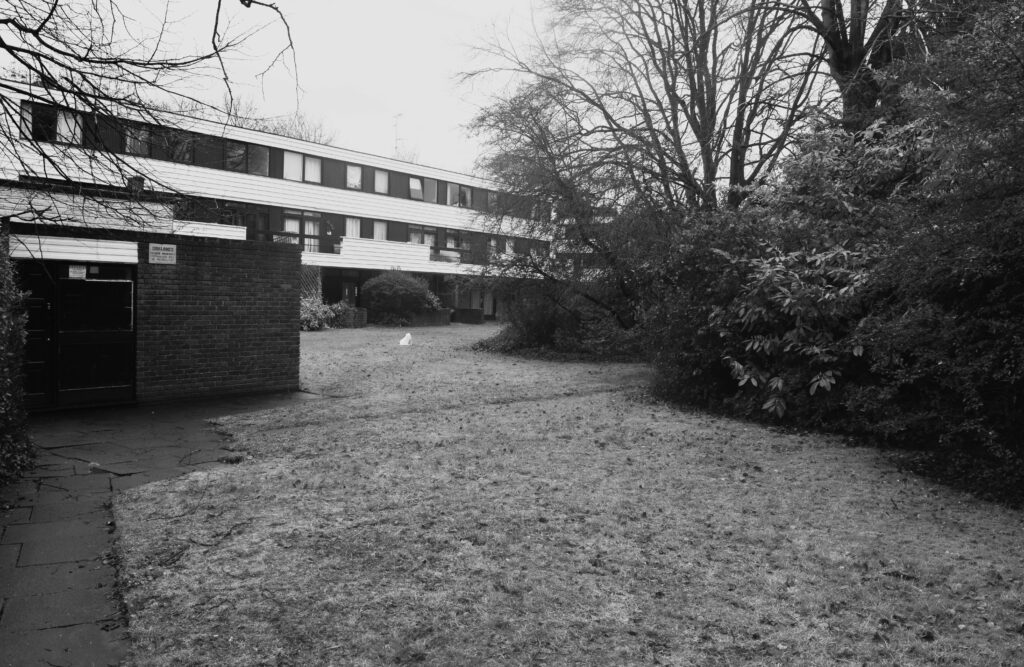
Image Credit: Paula Laycock, with permission for the Script Books Blog
In the years that followed a picture of Haywood’s pioneering work during the mid-20th century gradually emerged. This not only revealed her efforts to promote the profession of landscape architect, her interest in the extractive industries, her work for the CEGB and English China Clays, but it also revealed the diversity of her other projects from an award winning garden at the 1947 Chelsea Flower Show to a hospital development and a residential Span development in Reading.
One of Haywood’s final projects was for Wolfson College, Cambridge. In Ronald Gray’s 1984 book Cambridge Gardens, the Wolfson entry had merited just a few lines of text and there was no mention of Haywood’s involvement. Fortunately, Tim Richardson’s impressive Cambridge College Gardens (White Lion 2019) redresses that imbalance with substantial and beautifully illustrated chapters on both Wolfson and Churchill Colleges. Now, with the publication of my own book, the first major study of Sheila Haywood’s life and work, I feel that we have come full circle.
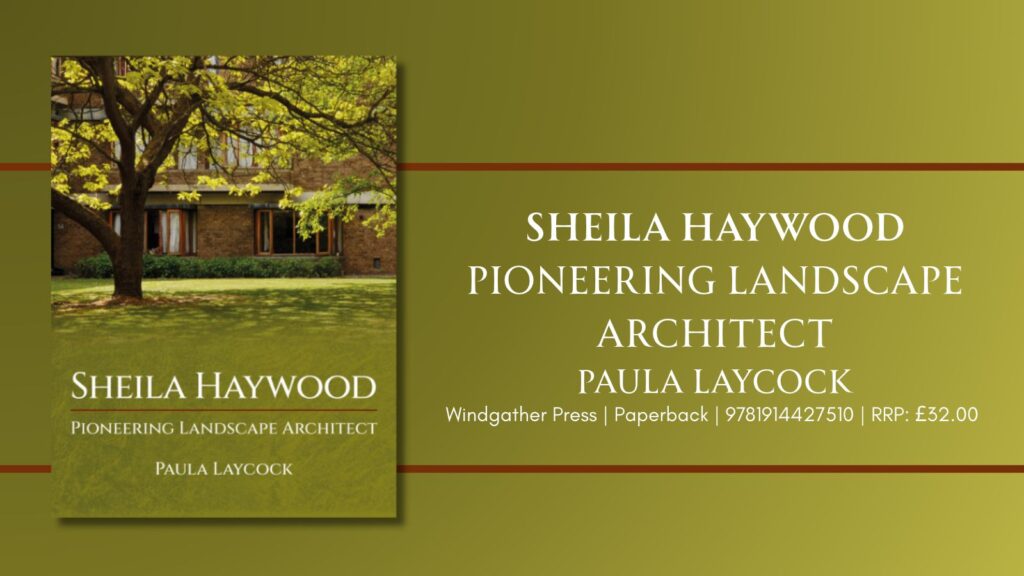
Sheila Haywood: Pioneering Landscape Architect is available now from Script Books.
Learn more about Sheila Haywood
Sheila Haywood: A life in landscape – Churchill Archives Centre
Sheila Haywood – Wikipedia (curated by Paula Laycock)
Featured image: Central buildings, Churchill College, Cambridge (1964). Image credit: Geoffrey Butlin, Churchill Archives Centre. CCPH/5/45/7 with permission for Paula Laycock and the Script Books Blog
 Follow