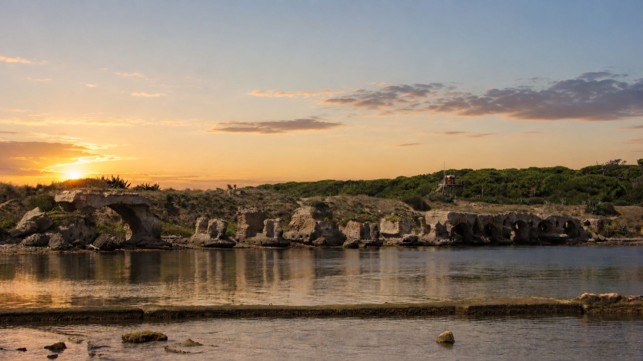
Dive into the sunlit coves, decorated grottos, and sophisticated marine fishponds of southern Latium with Roberta Ferritto, author of Roman Maritime Villas, and PI of the EU-funded project CLaRMaV (101106554), as she reveals why these coastal retreats were far more than luxurious holiday escapes, and why the race to document them is far from over.
By Roberta Ferritto | 6 min read
Two thousand years ago, the Greek geographer Strabo travelled along the Tyrrhenian coast between modern Terracina and the promontory of Gaeta and was astonished by what he saw: vast cave complexes housing grand, luxurious residences. The seascape of southern Latium offered the perfect setting: steeply descending promontories such as Monte Circeo and Capo d’Anzio, sea-carved grottos framing the shores of Sperlonga and Formia, and beautiful islands rising from the water to form the Pontine Archipelago. Yet this coastline is often overshadowed by a more glamorous neighbour.
When it comes to Roman luxury maritime villas, the Bay of Naples is typically regarded as the aristocratic address of choice, and this prevailing scholarly focus has left another coastline largely in the shadows. Roman Maritime Villas presents a more nuanced picture: despite the prominence of Campanian locations in literary accounts, the archaeological evidence currently available points to southern Latium as the true crucible in the development of the maritime villa typology. Why did Rome’s elite choose to build by the sea — and why did southern Latium become the birthplace of this extraordinary architectural tradition? One important factor was the early presence of well-established coloniae maritimae — Antium (338 BC), Tarracina (329 BC), Minturnae and Sinuessa (both 296 BC) — whose logistical and economic infrastructure encouraged both colonists and members of the Roman upper class to establish the first maritime villas along these flourishing shores. Roman Maritime Villas demonstrates how, from the early 2nd century BC, in the wake of Rome’s conquest of the Hellenistic East and the influx of eastern luxuria, the Roman elite was already staking out the coasts of southern Latium, well before the great Campanian boom.
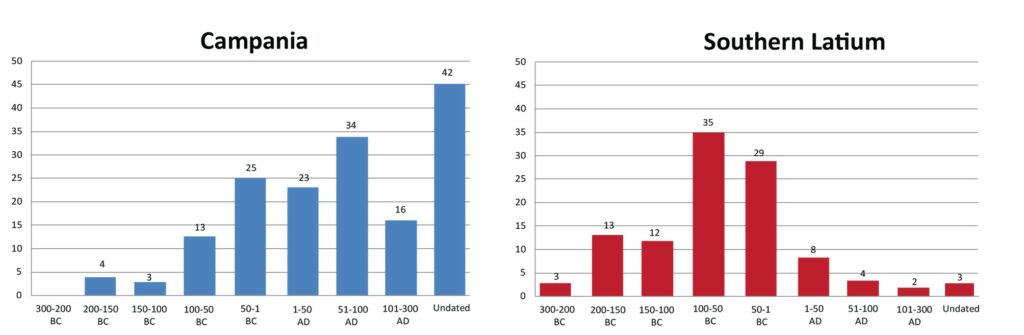
It was only from the Augustan age onwards — when the Bay of Naples became the emperor’s preferred destination — that Campania pulled ahead. Even then, southern Latium’s density remains striking: 109 villas along roughly 180 km of coastline, compared to approximately 160 along Campania’s 380 km. Coastal southern Latium was, in short, where the maritime villa first flourished and where its defining architectural models were born.
The coastal villas of southern Latium were not merely early — they were daring. Roman Maritime Villas documents a striking pattern of architectural and engineering experimentation driven by wealthy patrons and their ambitious architects. Villa Prato in Sperlonga preserves the earliest known balneum in any villa in southern Latium (c. 150 BC); the Villa of Iulia on Ventotene island features an iron-grid underfloor heating system in the bath complex with only one known parallel anywhere in the Roman Italian peninsula; in Gaeta, Villa Acque Salse contains one of only two known dams in a Latium Roman villa, while a Roman sāqiya (water-lifting wheel) is at the Villa S. Maria di Conta; most intriguing of all is Villa Gianola at Formia, where a 1stcentury BC octagonal structure may supply the prototype not only for Nero’s celebrated octagonal hall in the Domus Aurea, but also for later structures of the same geometric form in maritime villas across the Mediterranean basin, such as those found in Iberian villas of the 3rd century AD. The twenty-nine villas clustered along the coast between Formia and Gaeta were associated with important figures of the Roman military and political world, such as Cicero, Mamurra, Lucius Munatius Plancus, and Lucius Sempronius Atratinus, and many others. Their rivalry drove demand for ever more inventive design, turning this coastal strip into a laboratory where architects enjoyed the freedom and financial backing to take risks that would have been more difficult within the confines of the city.
The coastal villas of southern Latium were not merely early — they were daring.
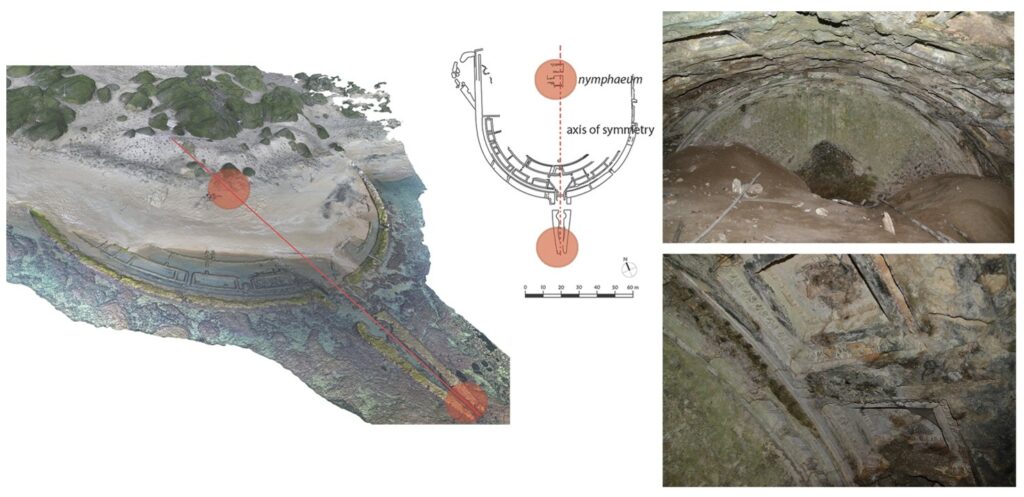
Among the architectural models developed in southern Latium, one feature recurs with particular frequency: terraced villas built on monumental substructures. Of the 109 sites examined, 49 have preserved, identifiable substructures. These engineered platforms played a crucial role in adapting villas to dramatically uneven coastal terrain, levelling steep slopes and creating stable bases for construction in otherwise inaccessible locations. Beyond their practical function, substructures shaped the visual composition of the villas, carefully positioning buildings to maximise views towards the sea, neighbouring settlements, and approaching ships.
In several villas, architects went further still, integrating decorative rooms within open vaulted substructures directly connected to fishpond complexes. These spaces combined utility with display, transforming infrastructural elements into prestigious environments for leisure and reception.
Maritime villas in southern Latium were not merely holiday estates. Many also served as centres of production, including olive oil and wine. Yet perhaps the most revealing form of economic activity attested at these sites is fish-farming. Approximately 30 villas in the study area possessed artificially built fishponds, structures that began as relatively simple rectangular basins and evolved, over the course of the 1st century BC, into elaborate complexes with multiple tanks of varied geometric forms. The analysis of these fishponds overturns a piece of conventional wisdom repeated since antiquity — most famously by Varro — that dismissed them as mere vanity projects, a nobleman’s toy. Through 3-D modelling, Roman Maritime Villas demonstrates that in at least nine cases the fish-farming capacity of these installations far exceeded any plausible internal needs of the villa household. The surplus could readily have been sold on the market.
Roman Maritime Villas is, however, only the first chapter of a larger story
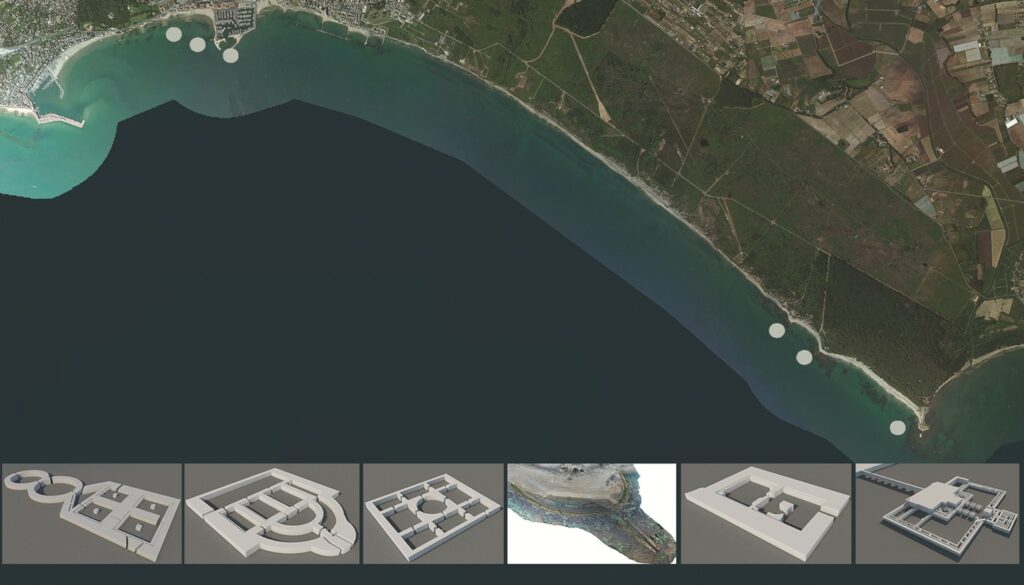
Such a conclusion is reinforced by the considerable capital investment that fishpond construction entailed. An experimental archaeology approach to quantifying labour costs establishes that every cubic metre of hydraulic concrete required approximately 30 man-hours of work. For the largest structures, this translates into tens of thousands of man-days of labour — a figure that shifts dramatically depending on workforce size and working hours, variables that ancient sources leave frustratingly underspecified. What is beyond doubt is that structures of this scale required specialist designers and skilled craftsmen, and that their completion was measured not in weeks but in years. They represented a substantial initial capital outlay — one that in turn conferred significant real-estate value on the villa. So distinctive are these structures in their location and design that they may legitimately be considered a monumental class in their own right.
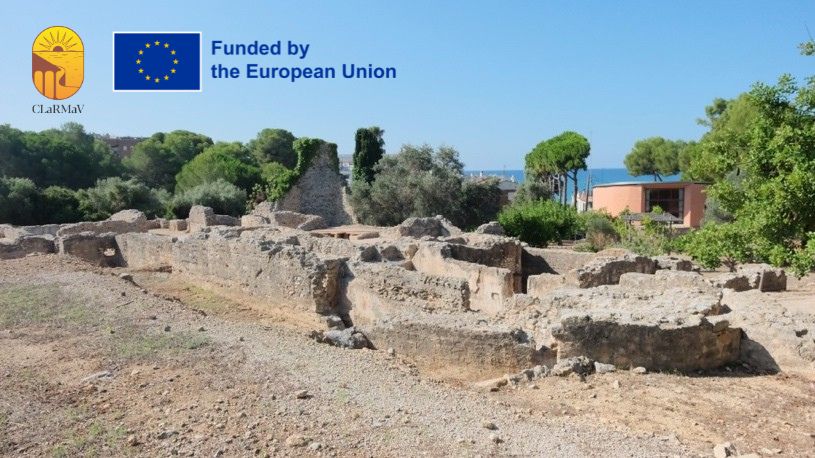
Roman Maritime Villas is, however, only the first chapter of a larger story. The questions it raises — about architectural diffusion, regional variation, and the dialogue between elite residence and coastal environment — are now being pursued on a Mediterranean-wide scale through CLaRMaV (Coastal Landscapes and Roman Maritime Villas: A Comparative Regional Study of Architectural Models and Environmental Settings), a Marie Skłodowska-Curie Global Fellowship funded by the European Union’s Horizon programme (grant no. 101106554). CLaRMaV extends the investigation beyond southern Latium to trace how the maritime villa typology spread, adapted, and evolved across different regions of the ancient Mediterranean — comparing architectural models, exploring the relationship between villa design and local environmental conditions, and assessing the economic role of these estates within their broader coastal landscapes. At a moment when coastal heritage is increasingly threatened, the work is far from finished, and the coastline still has much to reveal.
For more information, visit https://site.unibo.it/coastal-landscapes-roman-maritime-villas-architecture-landcsape/en
Roman Maritime Villas is available now from Script Books.
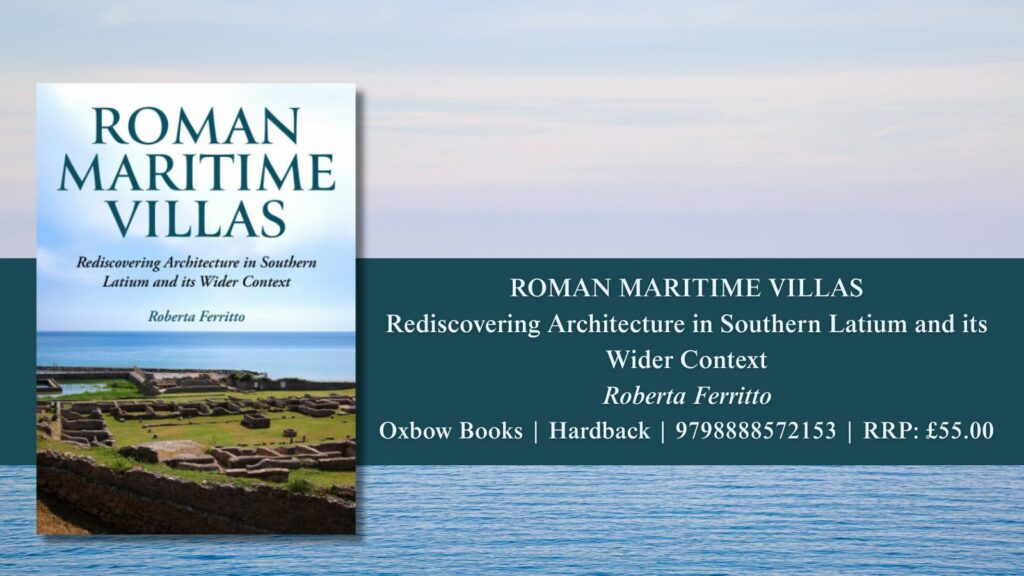
Featured image credit: Roberta Ferritto
 Follow